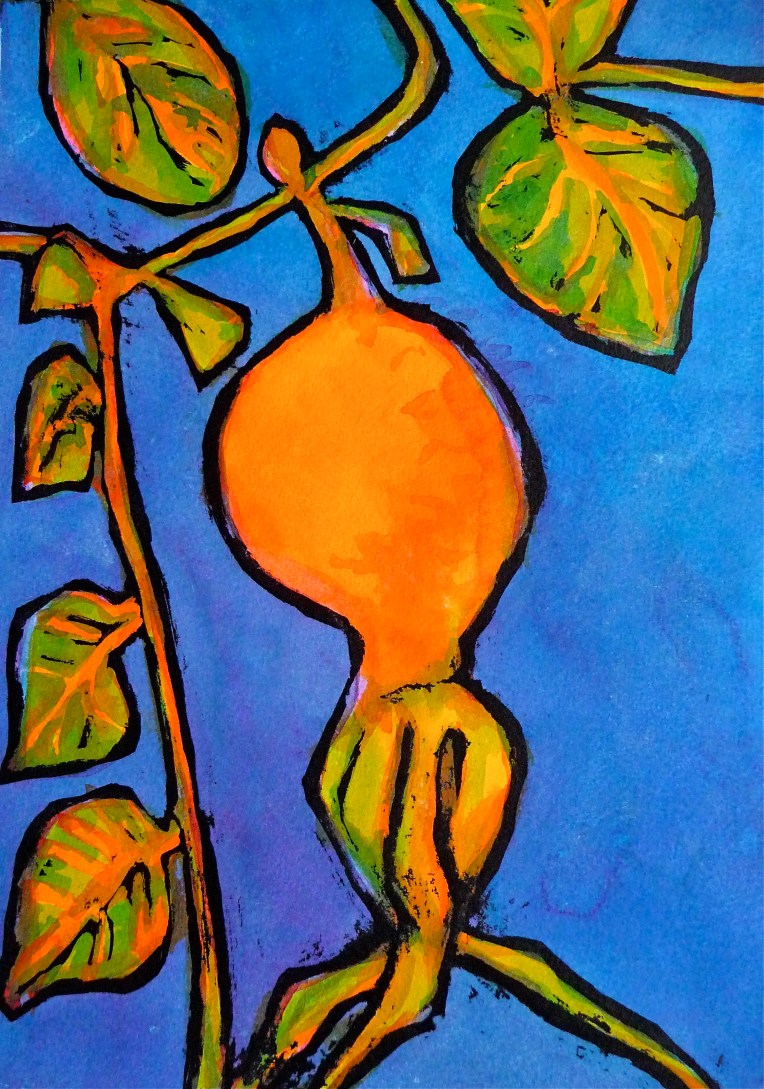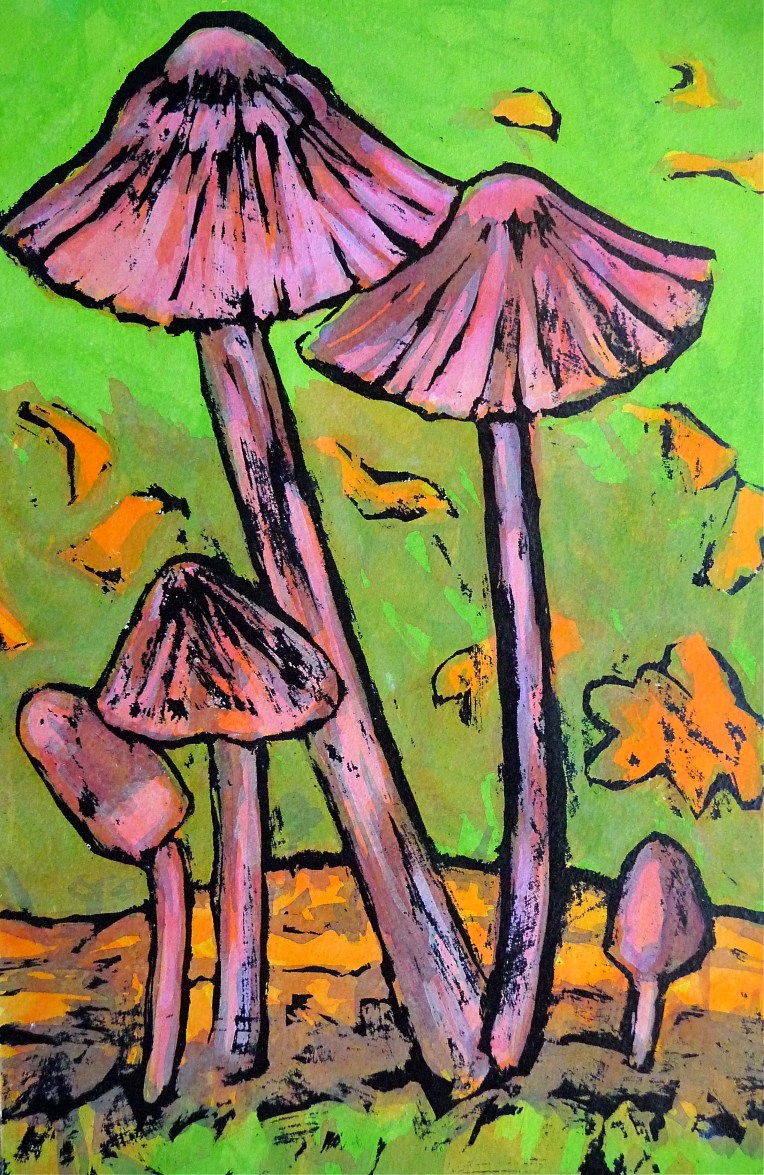
Fungi on oak twig – Jenny Hill – acrylic ink, indian ink

Fungi on oak twig - Jenny Hill - acrylic ink, indian ink

My seasonal studies continue after I went on a fungi hunt at Tiptree Heath organized by the Essex Wildlife Trust and supervised by a Mycologist from Colchester Natural History Museum. Approximately twenty people searched the heathland and in two hours collected 50 different fungi. Of these only a handful are good to eat, a few more are edible (would not make you ill), but some are highly toxic.
With very little time to draw I took photographs for reference. I find working from a print out of the photograph restricts my preferred way of working so I make quick sketches from the image on my computer, using pens or oil pastels. This approximates to drawings made outside and is my starting point for further development into an ink painting.
Essex Wildlife Trust
http://www.essexwt.org.uk/
Colchester and Ipswich Museums
http://www.cimuseums.org.uk/home.html
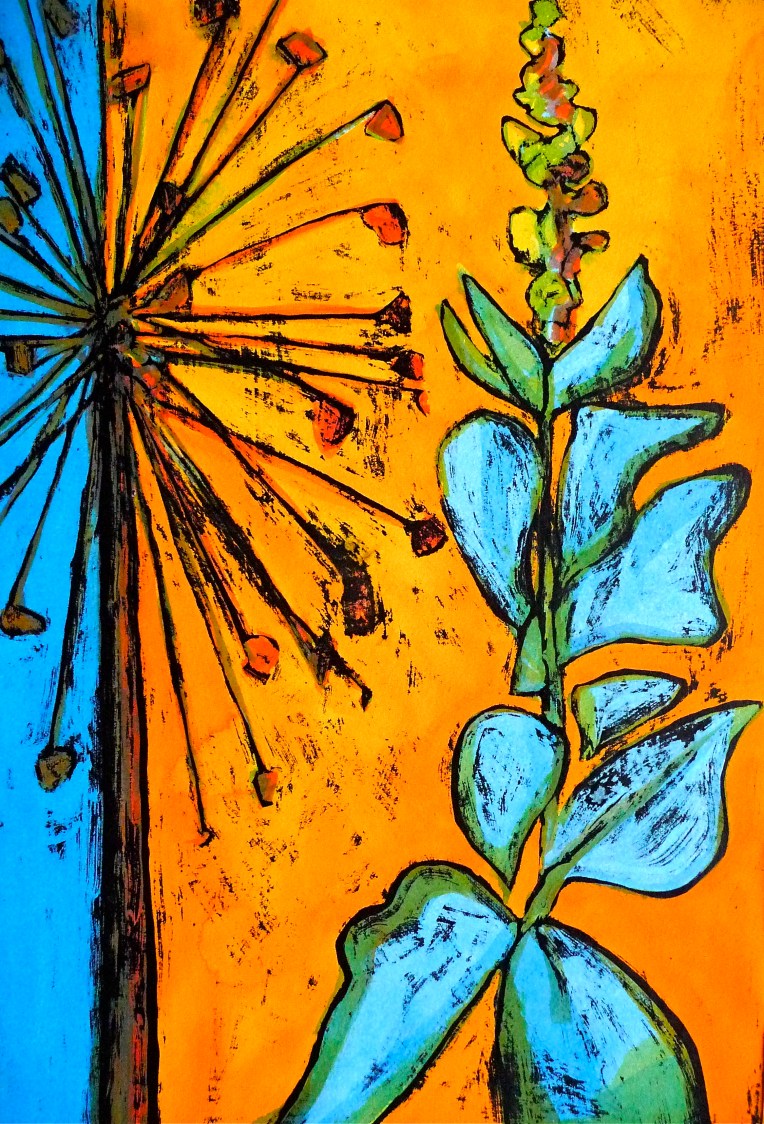
Plant form – Agapanthus no.2 – Jenny Hill

Plant form - Agapanthus no.2 - Jenny Hill

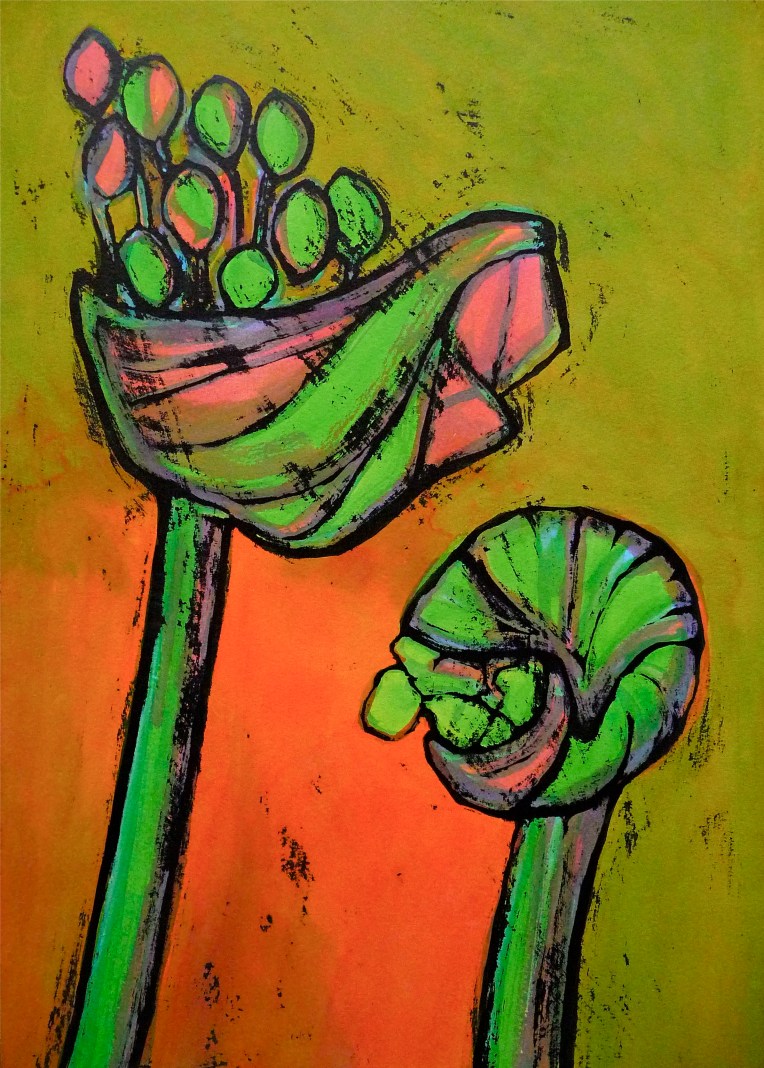
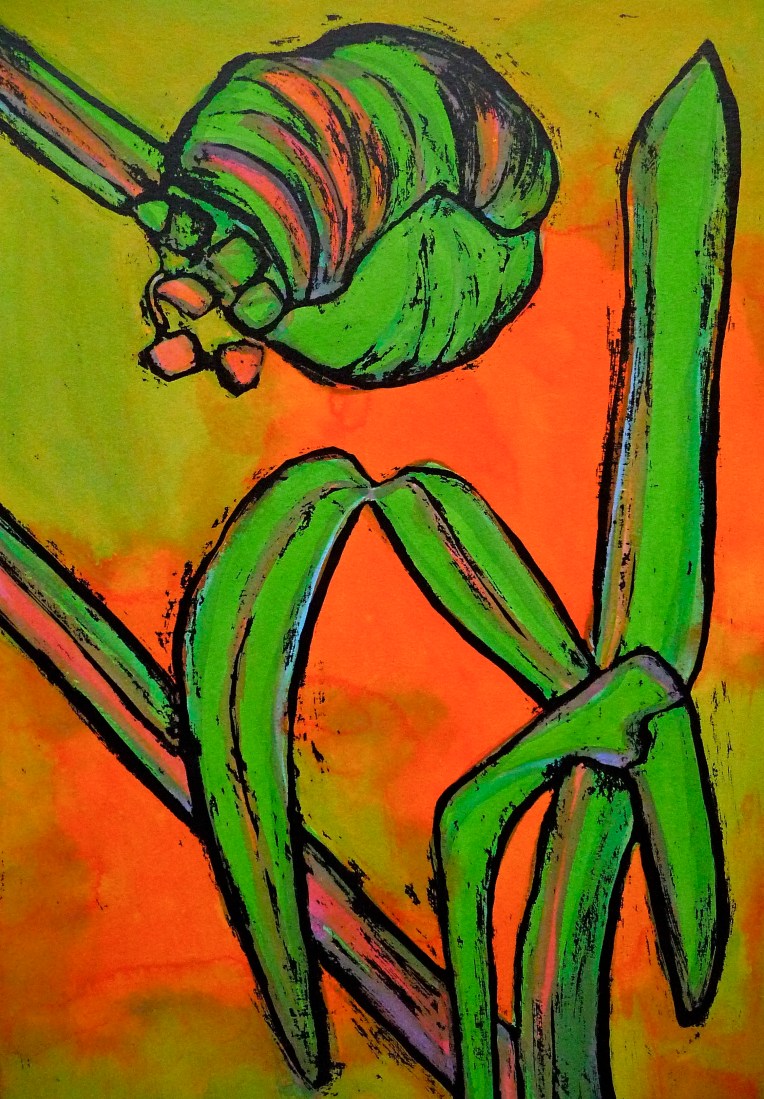
Agapanthus plant form – individual flower heads emerging from the bud.
Agapanthus no.2 is an ink painting developed from a sketchbook study. I draw with colour in my sketchbooks as it is another responsive element for expression of light, weather, heat, colour of the subject or my energy. I use the black ink in the paintings as a network, loosely overlaying the colour beneath, defining the form.

Jenny Hill ink painting – Plant form – Agapanthus bud no.1

Jenny Hill ink painting - Plant form - Agapanthus bud no.1

Continuing my seasonal studies through sketching or photographs, I look most days for any changes in the garden, something that has done its thing, a fling of colour or shape, maturing into another form or the promise of a new happening. This is the fat flower bud of an Agapanthus still tightly closed against the unstoppable spilling out of the individual flower heads.
Agapanthus bud no.1 is an acrylic ink and indian ink painting developed from an oil pastel sketch.

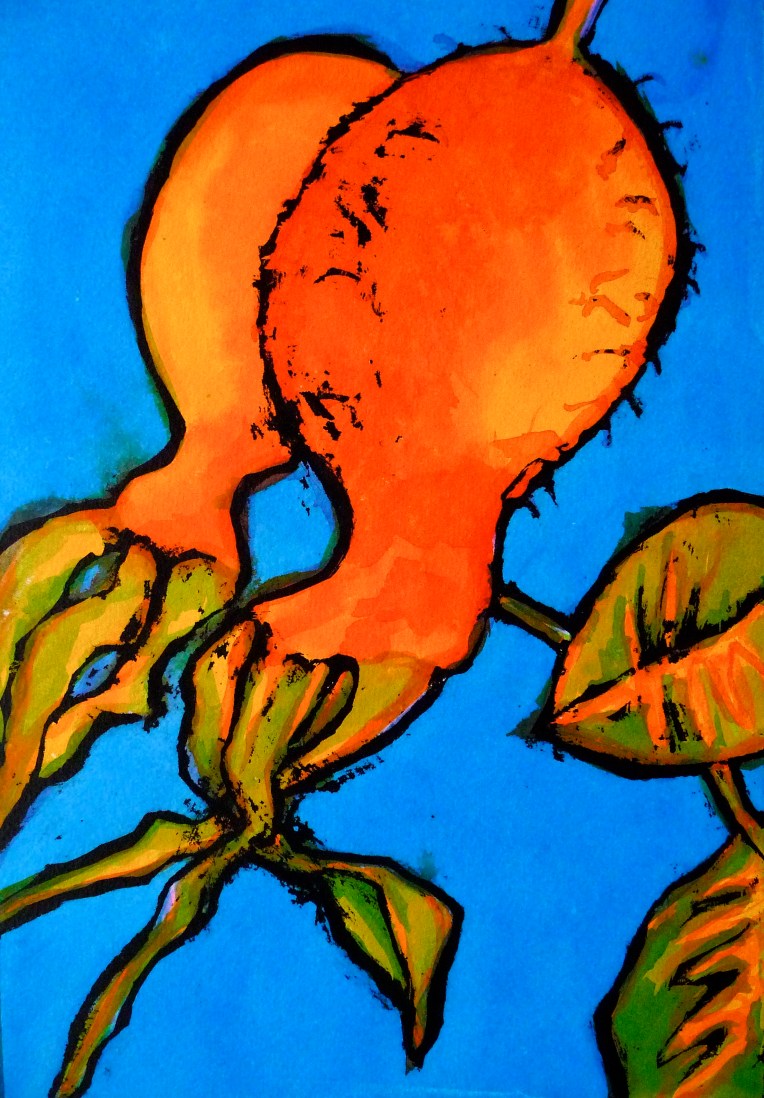
Plant form – Rose hips ripening no.2 – Jenny Hill

Plant form - Rose hips ripening no.2 - Jenny Hill

On a walk with sketchbook and pens you can get a lot of drawing done that may also be useful for artwork development, (plus it gives you a reason to stand still and look without other people thinking you are a bit odd). If I have a focus and an idea of what I might see, this is a walk of attention and observation, trying to get the most from being somewhere at a particular time and not missing the moment.
Rose hips ripening no.2 is an ink painting developed from sketches made using brush pens and chunky felt tip pens. For any painting I want it to be as light resistant as possible, but in my sketch books this is not an important factor.

Detail “Yemanya’ African & Brazilian Goddess, mixed media mosaic – Anne Schwegmann-Fielding

Seen this week in Hayletts Gallery art shop, a striking sculpture, “Yemanya” – African & Brazilian Goddess, mixed media mosaic by Anne Schwegmann-Fielding.
The main gallery exhibition has paintings by Anthony Atkinson ARCA and Pam Dan ARCA and runs until 13th November. The two artists present distinct individual approaches to their subject matter but are unified in this show by the colour they use – subtle ranges of blues and greens lifted by the light seen in the yellow and ochre.
For more information and images visit
http://www.haylettsgallery.com
http://www.anneschwegmann-fielding.com

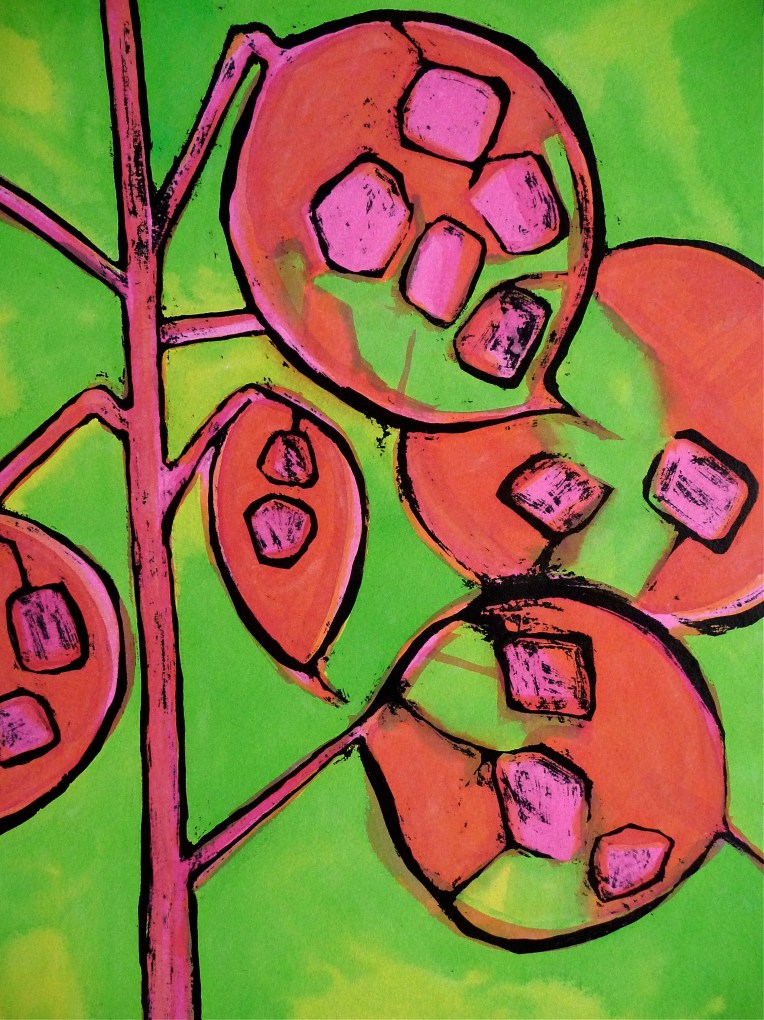
Plant form – Honesty ripening no.2

Plant form - Honesty ripening no.2

Continuing my current series of ink work this is the second plant form study of Honesty (Lunaria), seed head ripening. These self seed around the garden and I feel are a useful addition in the early summer with the white or purple flowers. The tender green seed pod discs evolve picking up purples, pinks and reds as it matures to its end of season form. The silver translucent remains now stand, having shed the brown seeds.
Wikipedia has interesting information for the origin of both names – Lunaria and Honesty but there many other names this plant is also known by.

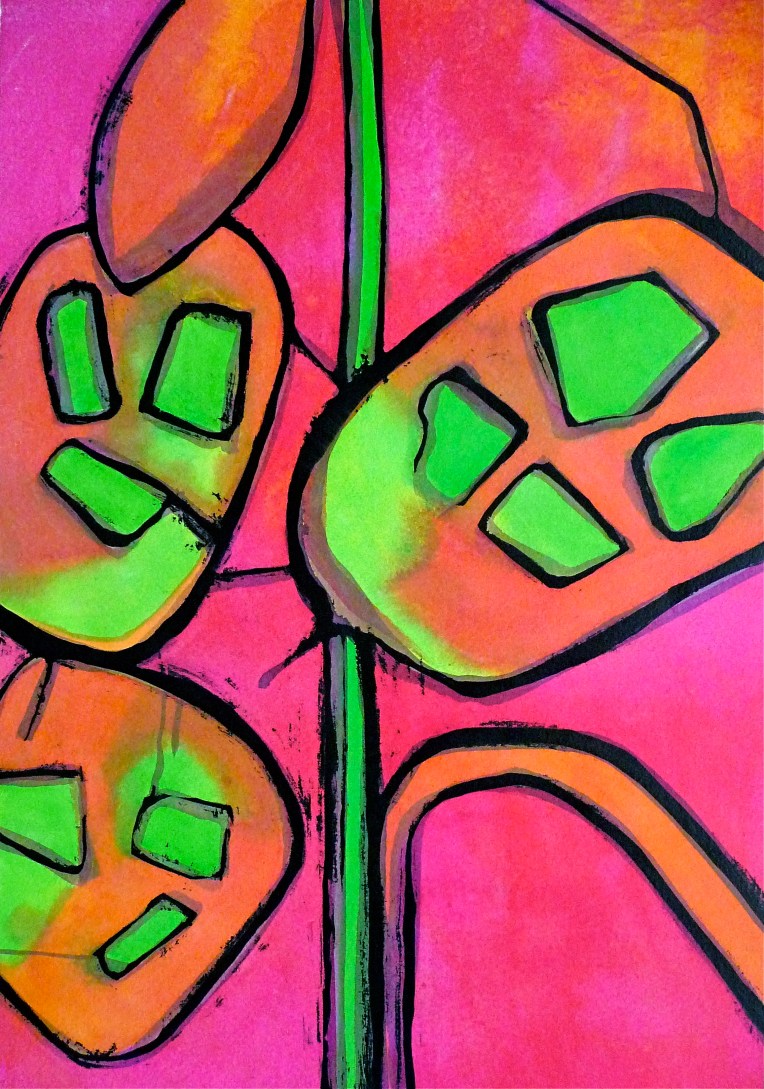
Plant form – Honesty seed head ripening

Plant form - Honesty seed head ripening

Before the seed head ripens to brown and silver it goes through a range of pink, red and green. This year was good, not a lot of rain in the summer, hot and dry, so very little black mould to discolour the drying seed head. I used indian and acrylic ink for this painting, reworking an oil pastel sketch from early summer. Throughout the year I fill sketch books with drawings, initially to record my idea of the transformation of plants but always with a focus that this is a resource for future artwork.
I use photographs when the weather is too cold or wet, or I am rushed for time but my preference is to work from my first impression recorded by drawing.

Rose Hip Ripening no.1 – RHS Garden Hyde Hall

Rose Hip Ripening no.1 -  RHS Garden Hyde Hall

A painting using acrylic ink and indian ink, developed from a sketch made on a hot, late summers day visit to RHS Garden Hyde Hall, Essex, UK. At this time some rose hips had turned scarlet red, (see earlier blog post), but this was still in the process of ripening. The smaller size of the paper directs me to paint and draw in a tighter style instead of the looser line I use on larger art works. It’s all in the arm movement. I believe you can identify, without me telling you, which paintings are small and which are large.